
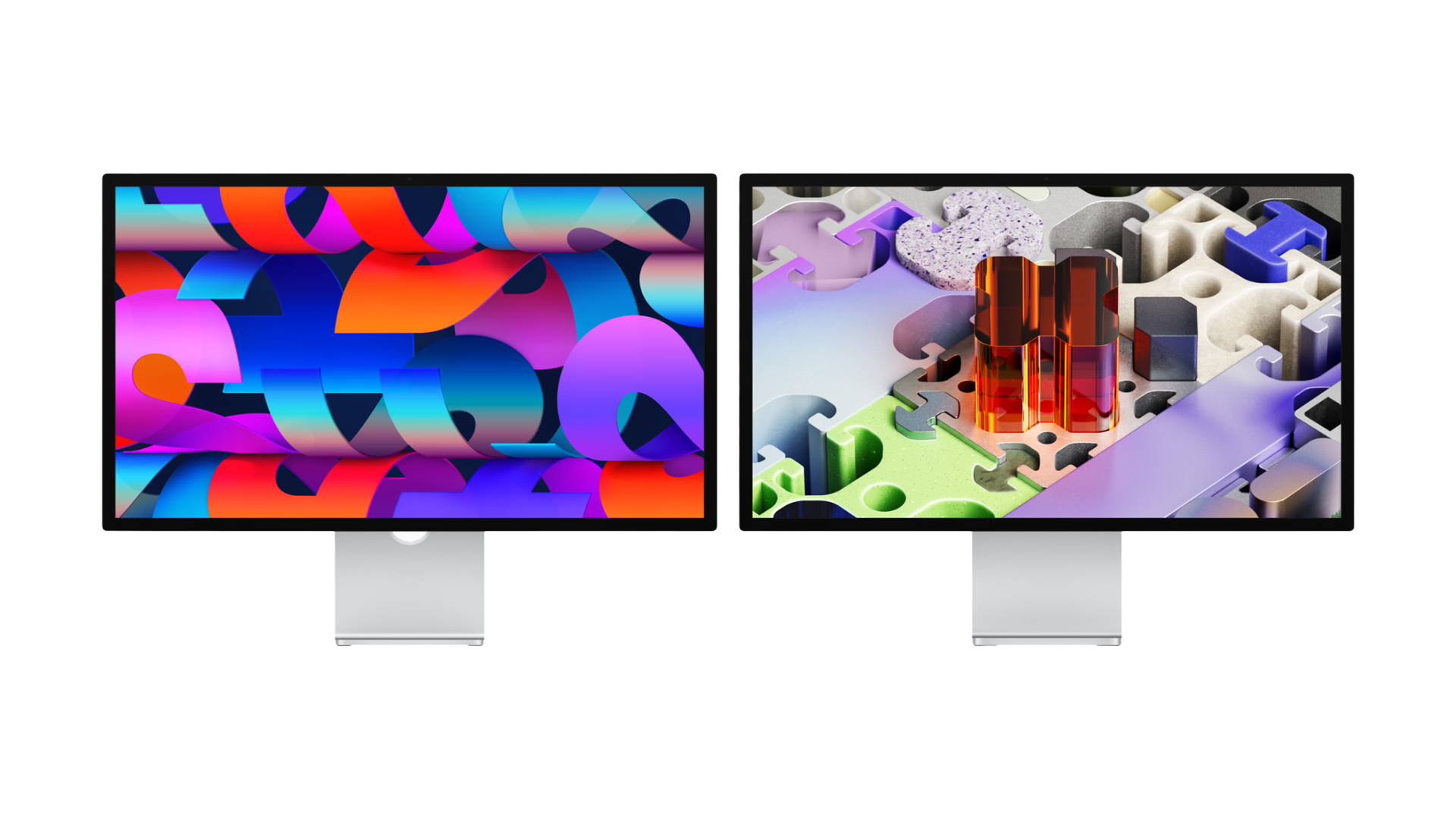
Apple continued its big week of announcements with something a lot of Mac users have been waiting for: an updated display lineup.
Apple today announced updates to both of its displays: a refreshed Studio Display and a brand-new Studio Display XDR. Both models are available for pre-order starting tomorrow, March 4, with availability on March 11.
The Studio Display gets meaningful updates to its camera and connectivity while maintaining its established role as the go-to external display for everyday Mac users who want a polished, fully-integrated Mac experience from their display. The Studio Display XDR is an entirely new product, one that rethinks what an Apple pro display looks like, with mini-LED backlighting, 2000 nits of peak HDR brightness, a 120Hz refresh rate, and new DICOM medical imaging capabilities that open the door to a professional audience Apple has not historically targeted with display products.
The Updated Studio Display: Camera, Bass, and Thunderbolt 5
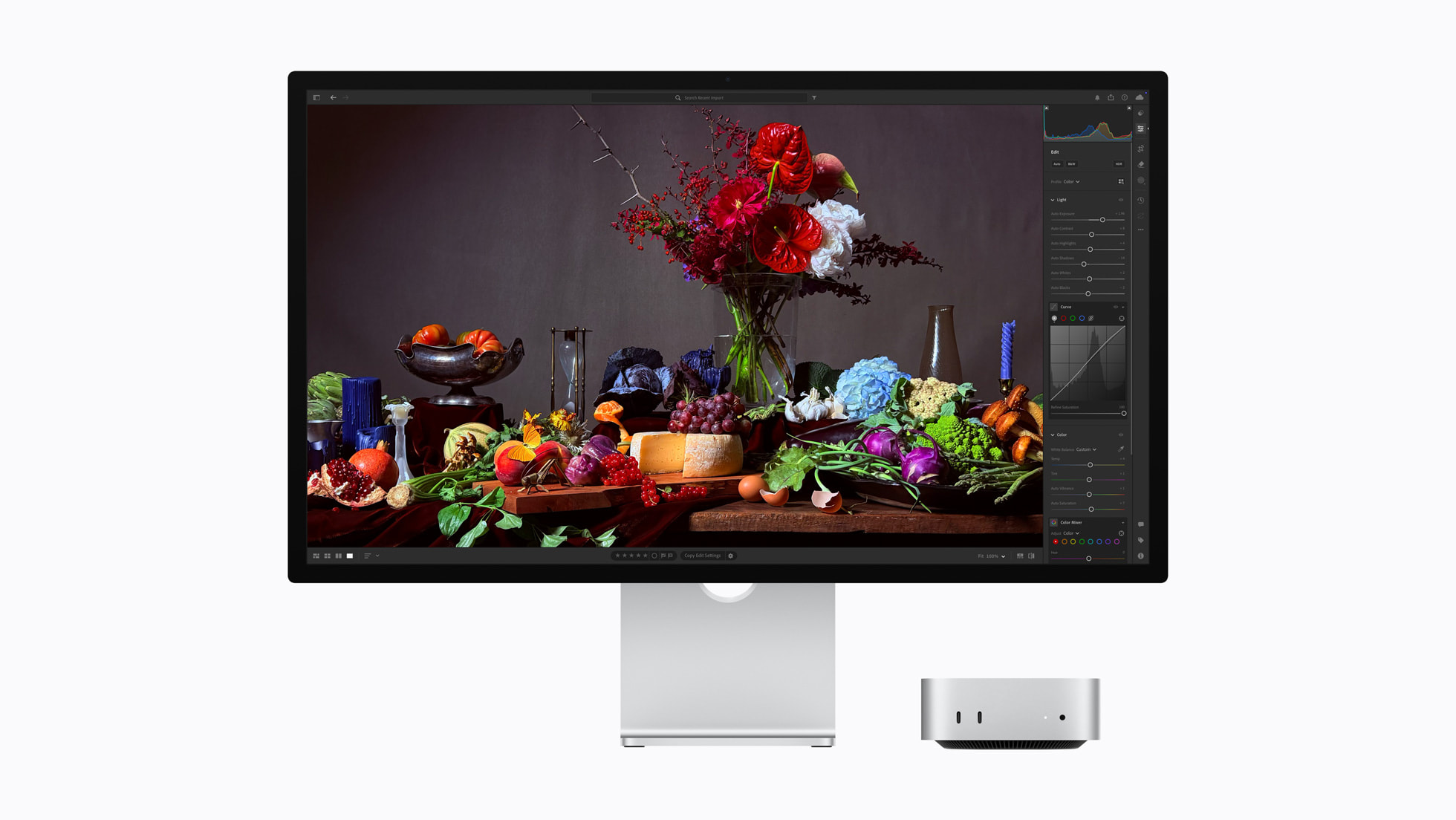
The new Studio Display carries forward the same stunning 27-inch 5K Retina panel with over 14 million pixels, 600 nits of brightness, and P3 wide color as its predecessor. What has changed is everything around it.
The camera is now a 12MP Center Stage unit—the same class of camera that Apple puts in current iPad models—and it now includes Desk View support, which uses computational photography to simultaneously show the caller and a top-down view of the desk surface below. For educators, designers presenting work, content creators and anyone doing hands-on demonstrations over video calls, this is genuinely useful.
The speaker system has also been improved. The six-speaker array still features two high-performance tweeters and four force-cancelling woofers, but the woofers now deliver 30 percent deeper bass than the previous generation, which was already one of the best audio systems built into any monitor.
The most significant hardware change is the arrival of Thunderbolt 5. The Studio Display now ships with two Thunderbolt 5 ports, allowing users to daisy-chain up to four Studio Display models off a single MacBook Pro with M5 Max for a combined resolution approaching 60 million pixels across all four screens. Two additional USB-C ports handle peripherals and charging. The included Thunderbolt 5 Pro cable delivers up to 96W of charging power, enough to fast-charge a 14-inch MacBook Pro from a single cable connection.
The Studio Display remains available with standard glass or optional nano-texture glass, and can be configured with a tilt-adjustable stand (included), a tilt- and height-adjustable stand, or a VESA mount adapter.
Pricing starts at $1,599, with education pricing at $1,499.
The All-New Studio Display XDR: A True Pro Reference Display
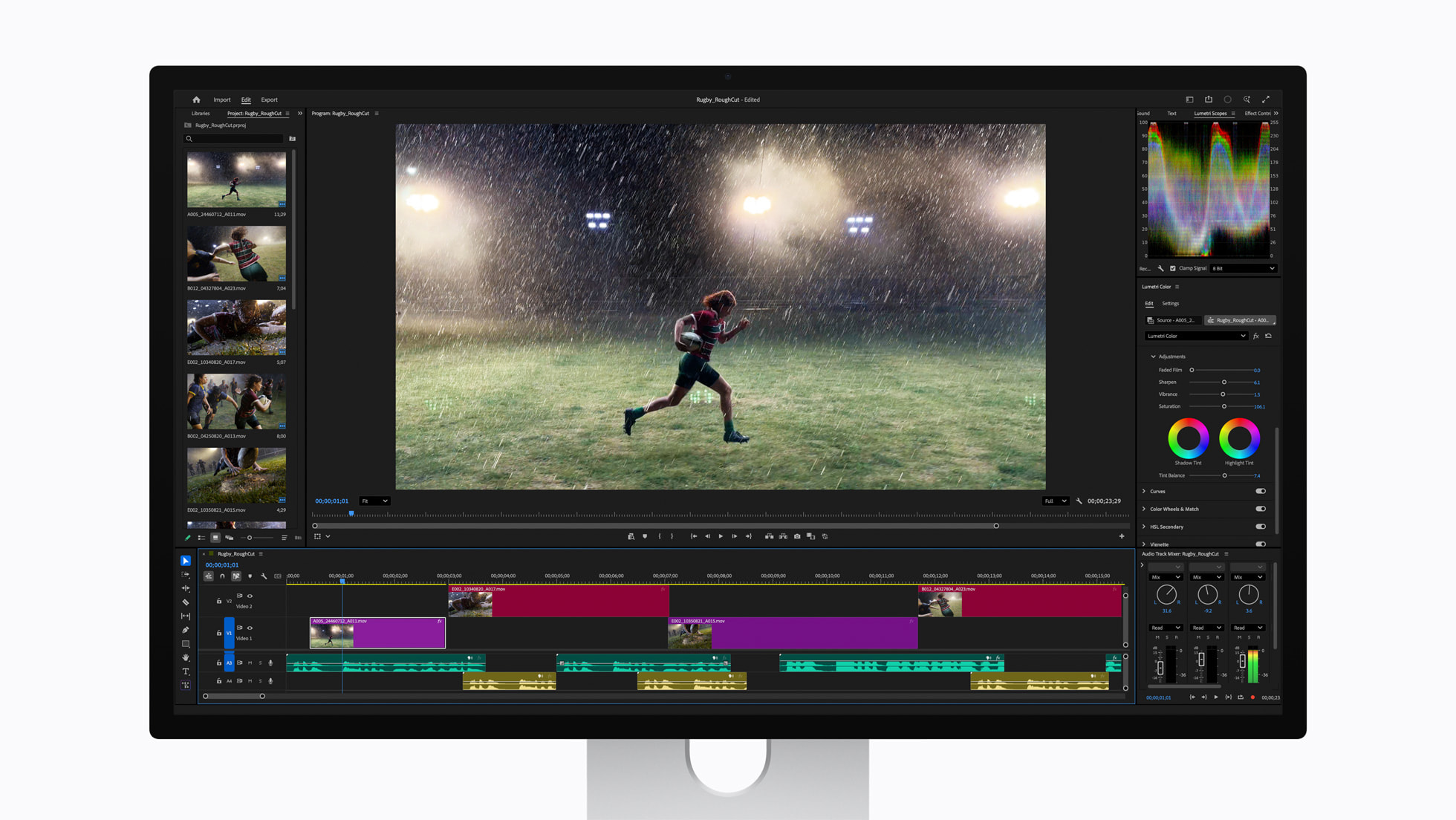
The Studio Display XDR is where things get genuinely exciting for professional users who demand the most from their displays. And this isn’t an incremental update, it’s a new product in a new class, replacing the Pro Display XDR with something more capable in nearly every dimension.
Mini-LED backlighting with 2,304 local dimming zones. The Studio Display XDR replaces the traditional LED backlight with an advanced mini-LED system featuring 2,304 independently controlled local dimming zones. The result is extreme contrast, largely eliminating the halo and blooming effects of conventional LED backlights. Apple rates the display at 2000 nits of peak HDR brightness and 1000 nits for SDR content, with a 1,000,000:1 contrast ratio. For video editors grading HDR content, photographers managing highlights and shadows, and motion graphics artists working with dark backgrounds, this is a transformative improvement in display quality.
Adobe RGB and P3 together. The Studio Display XDR adds Adobe RGB color gamut support alongside the P3 wide color that the standard Studio Display offers. Both color spaces are accessible from the same default preset, meaning professionals switching between print-oriented work and video production do not have to manually reconfigure the display. Total coverage exceeds 80 percent of the Rec. 2020 color space, making this a viable reference display for HDR video grading.
120Hz with Adaptive Sync. The Studio Display XDR runs at 120Hz and supports Adaptive Sync across a continuously variable range from 47Hz to 120Hz. For a professional display at this price point and resolution, this is a significant addition. It makes the display more responsive for motion-heavy workflows and meaningfully better for gaming, which is increasingly part of the Mac pro user’s workflow given the growing catalog of AAA titles on macOS.
DICOM medical imaging. Apple is entering new territory here. The Studio Display XDR ships with new DICOM medical imaging presets and will support a Medical Imaging Calibrator in macOS — pending FDA clearance — designed for use in diagnostic radiology. Radiologists will be able to use the Studio Display XDR in place of single-purpose medical imaging displays, switching seamlessly between clinical and standard display modes.
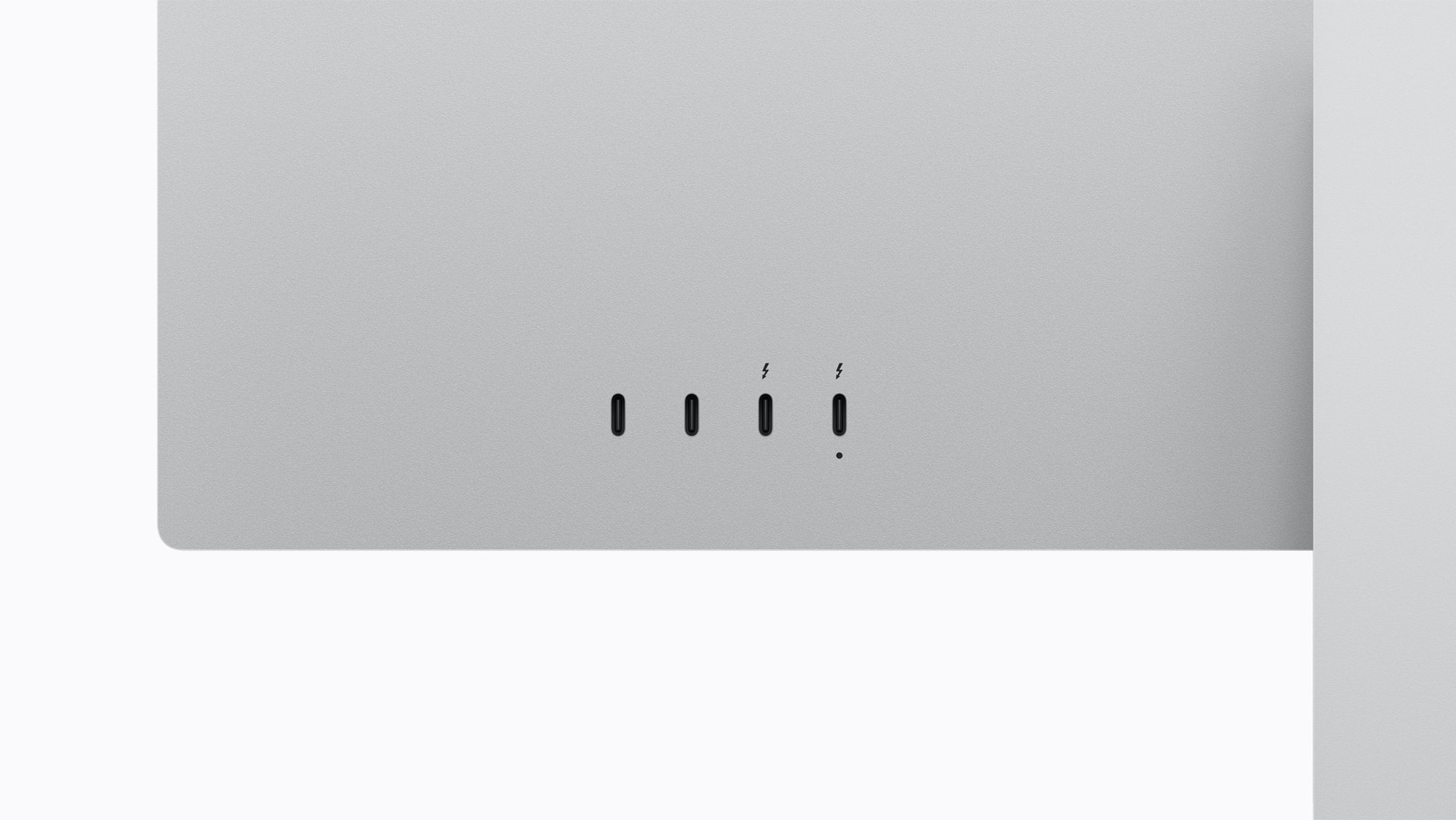
Thunderbolt 5 and 140W charging. Like the standard Studio Display, the XDR features Thunderbolt 5 connectivity: two ports, allowing downstream device connections and display daisy-chaining. Two additional USB-C ports round out the hub functionality. The included Thunderbolt 5 Pro cable delivers up to 140W of charging power, enough to fast-charge a 16-inch MacBook Pro.
Camera and audio. The Studio Display XDR features the same 12MP Center Stage camera with Desk View, the same studio-quality three-microphone array with directional beamforming, and a six-speaker system with Spatial Audio support as the standard Studio Display.
Stand. Unlike the standard Studio Display, the XDR ships standard with a tilt- and height-adjustable stand featuring a 105mm height range and a counterbalancing arm that makes repositioning feel nearly effortless. A VESA mount adapter is available for those with existing mount setups.
Pricing starts at $3,299, replacing the Pro Display XDR at a lower price point while delivering substantially better capabilities. Education pricing is $3,199.
Pre-Order and Availability
Both displays are available for pre-order starting March 4, with availability in select Apple Store locations and Apple Authorized Resellers beginning March 11.