
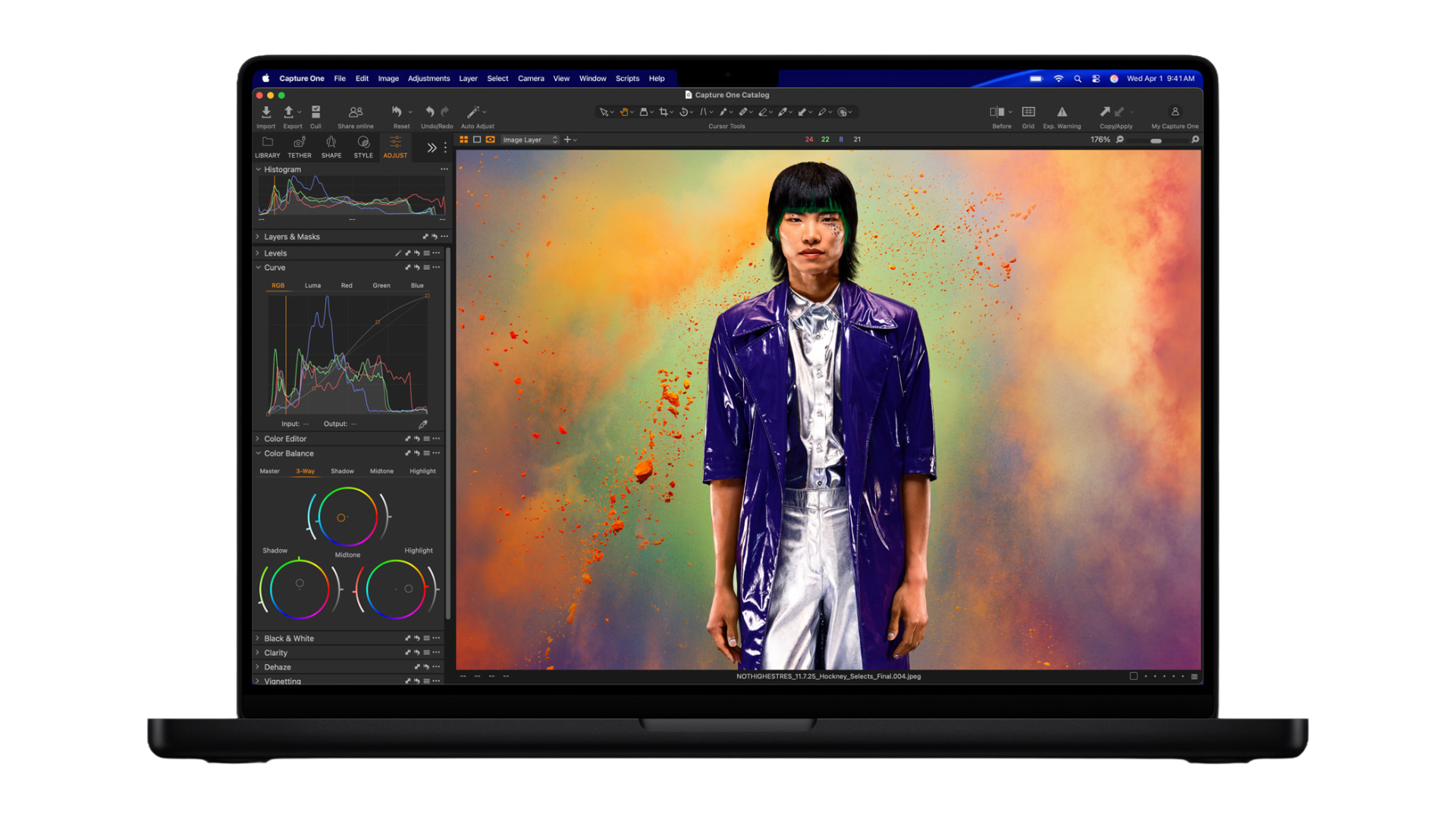
Whenever Apple releases a new MacBook Pro with the same design and same screen but with a new chip inside, it’s pretty easy to to label it a “spec bump” and move on. And though the new 14- and 16-inch MacBook Pro have arrived with little else new but the new M5 Pro and M5 Max inside, calling these new laptops a spec bump doesn’t really do them justice.
That’s mainly due to what’s new about the M5 Pro and M5 Max chips themselves, specifically the fact that they’re built built on a brand-new Fusion Architecture that Apple describes as a fundamental rethinking of how to scale Apple silicon. The result is a machine that delivers significant performance gains over previous models. Let’s dig in to all the details.
What is New Beyond the Chips
Before getting into the chip details (which are substantial—in fact, we have a dedicated post on the M5 Pro and M5 Max you can check out here), it is worth noting what else has changed in the MacBook Pro itself.
For starters, SSD performance has doubled, reaching up to 14.5GB/s in top configurations. This is a meaningful improvement for anyone regularly ingesting 4K and 8K media, working with large datasets, or loading multi-gigabyte LLM models. Base storage has also increased: M5 Pro models now start at 1TB, and M5 Max models start at 2TB.

Wi-Fi 7 and Bluetooth 6 arrive via Apple new N1 chip, the same wireless networking chip that debuted on the MacBook Air and iPad Air this week. The MacBook Pro retains its three Thunderbolt 5 ports, HDMI up to 8K, SDXC card slot, and MagSafe 3 with fast charge capability.
The display on these new models is unchanged. The Liquid Retina XDR with 1600 nits peak HDR brightness and up to 1000 nits for SDR content is still the best screen in any laptop and a nano-texture option is available for users working in bright environments. Battery life holds at up to 24 hours, which remains best-in-class for a laptop of this performance level.
Significant Performance Improvements
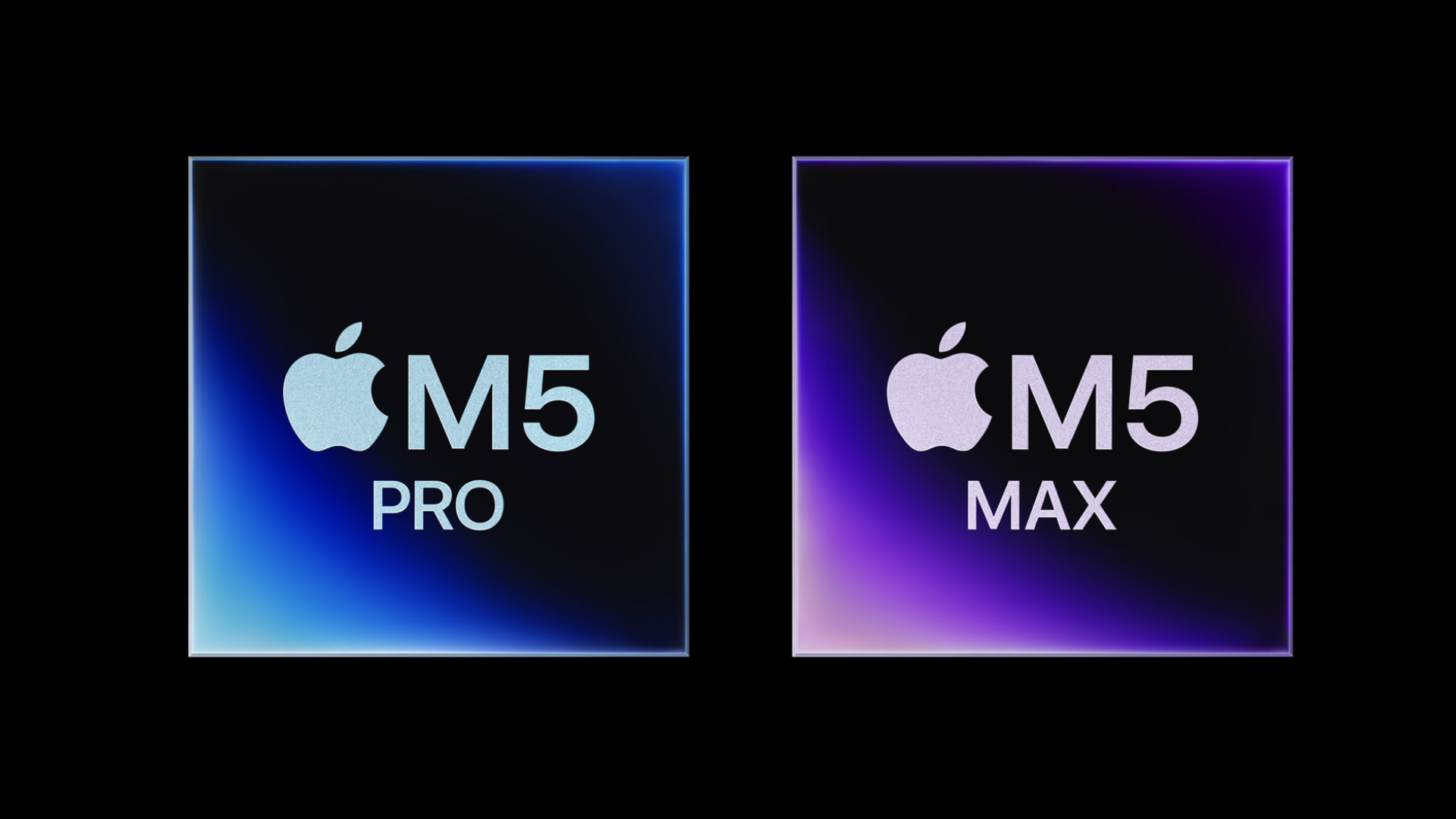
For the full details on everything new with the new M5 Pro and M5 Max check out our deep dive on the chips here. But as we noted in that earlier piece, the M5 Pro and M5 Max feature new Performance and Super core designs. Performance cores in M5 Pro and M5 Max are distinct from the Efficiency cores of previous generations of the Pro and Max chips. These new Performance cores are specifically optimized for power-efficient multithreaded work at the pro level. Together with the Super cores, they deliver up to 30 percent faster CPU performance for pro workloads versus M4 Pro, and up to 2.5x the multithreaded throughput of M1 Pro and M1 Max.
The GPU on these new chips scales from up to 20 cores in M5 Pro to up to 40 cores in M5 Max, and every single GPU core now includes a Neural Accelerator. This architecture was introduced in the base M5 chip but is arriving in the Pro and Max tier for the first time with this generation.
With Neural Accelerators now embedded in every GPU core the MacBook Pro on-device AI capabilities take a dramatic step forward. Apple cites up to 4x faster LLM prompt processing than the previous generation and up to 8x faster AI image generation than M1-era models. These are not abstract benchmarks: they translate to real-world differences in how quickly tools like LM Studio respond, how fast AI-powered video enhancement processes footage in Topaz Video, and how rapidly developers can iterate on locally-run models.
On traditional graphics tasks, the gains are also notable: up to 20 percent higher graphics performance versus M4 Pro and M4 Max, and up to 35 percent better performance for apps using ray tracing (30 percent for M5 Max versus M4 Max). The third-generation ray-tracing engine, second-generation dynamic caching, and hardware-accelerated mesh shading all contribute to real-world improvements in 3D rendering, VFX compositing, and gaming.
For the MacBook Pro with M5 Max specifically, Apple reports up to 3.5x faster AI video enhancement in Topaz Video compared to M4 Max, a striking jump in just one generation that underscores how significantly the Neural Accelerator architecture changes the on-device AI calculus.
M5 Pro supports up to 64GB of unified memory at 307GB/s of bandwidth. M5 Max doubles that to 128GB at 614GB/s. These bandwidth figures represent major increases over the previous generation and are central to the AI performance story.
Pricing and Availability
Pre-orders open March 4, with availability beginning March 11. Pricing:
- 14-inch MacBook Pro with M5 Pro: $2,199 (education: $2,049)
- 16-inch MacBook Pro with M5 Pro: $2,699 (education: $2,499)
- 14-inch MacBook Pro with M5 Max: $3,599 (education: $3,299)
- 16-inch MacBook Pro with M5 Max: $3,899 (education: $3,599)
- 14-inch MacBook Pro with M5 (base): $1,699 (education: $1,599)
All models are available in space black and silver.
Other Topics You Might Like:
 Apple Unveils $599 MacBook Neo: A Real Mac at a Breakthrough Price
 Apple Refreshes the MacBook Air with M5: The World’s Most Popular Laptop Gets Even Better
 Apple Announces the iPhone 17e. This Time, It’s a Real Value.
 Apple Announces New iPad Air with M4: A Solid Spec Bump with Some Surprises Under the Hood