

Apple made a lot of news this week. A new iPhone, a new iPad, new displays, and new Macs. And one of the big topics surrounding the new Macs beyond the insanely powerful new chips inside of the MacBook Pros are the higher price tags on those new Pro models and the M5 MacBook Air.
But before you let sticker shock take hold, it’s worth taking a closer look at what you’re actually getting for your money. In reality, the story is more nuanced than some headlines might suggest. So, let’s break down how much more each starting price is and then we’ll see how the configurations of these models compare to last year.
M5 MacBook Air: $100 More?
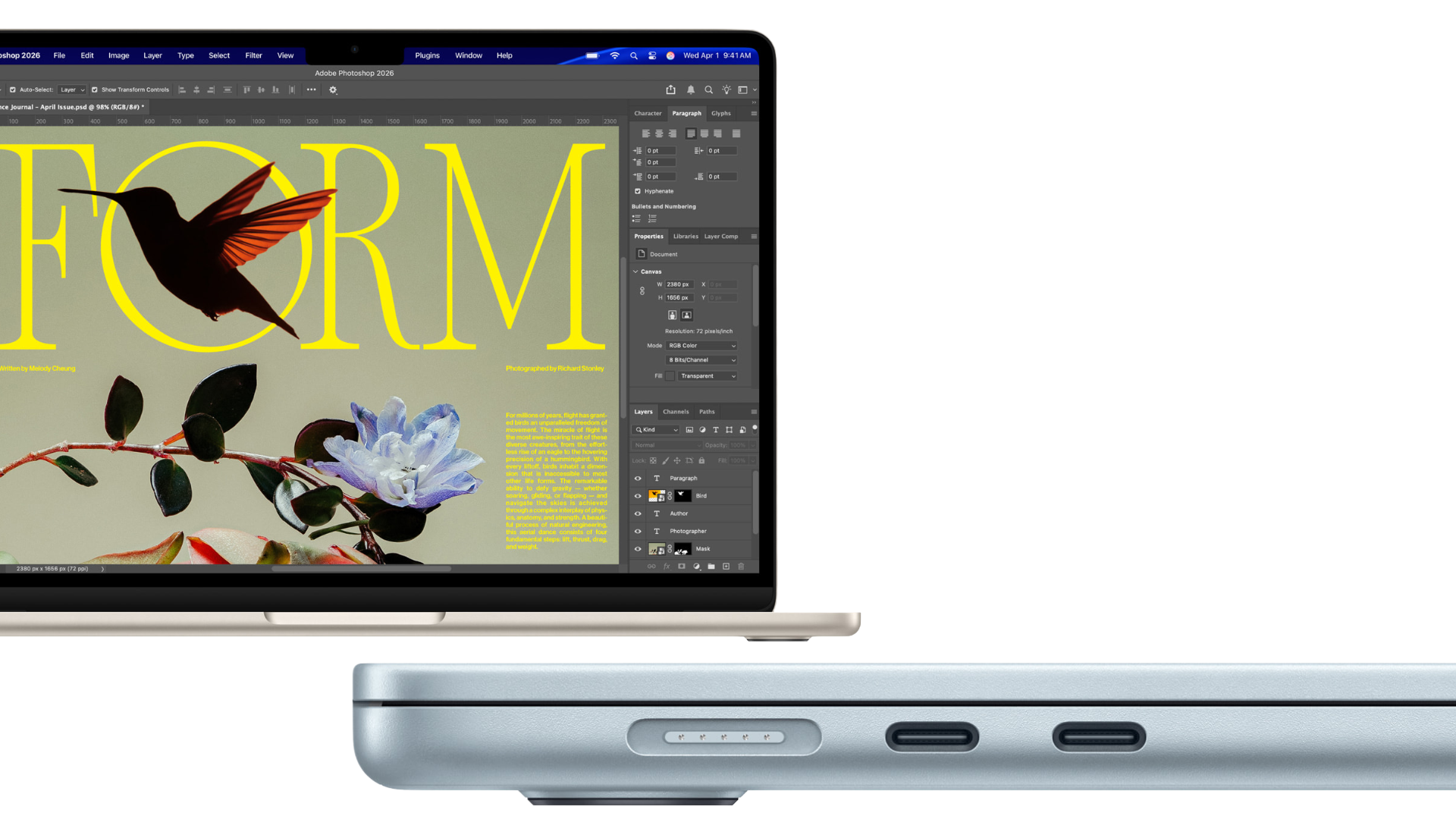
The M5 MacBook Air starts at $1,099 for the 13-inch model, up $100 from the $999 starting price of the M4 MacBook Air. The 15-inch model similarly moves from $1,199 to $1,299.
So yeah, Apple raised the prices. But that’s not all they did. The M5 MacBook Air now comes standard with 512GB of storage. The outgoing M4 model started with just 256GB. So the question then becomes, how much did an M4 MacBook Air with 512GB of storage cost?
Though you were able to get it for cheaper in the months following launch with discounts at certain retailers, the 13-inch M4 MacBook Air with 512GB of storage cost $1,199. That means the M5 MacBook Air with 512GB actually costs $100 less than the equivalent M4 configuration did.
And the same math applies to the 15-inch. Configured with 512GB, the M4 model cost $1,399. The M5 model with the same storage is now $1,299.
So while the price went up at the entry level, if you compare Apples to Apples—pun very much intended—the M5 MacBook Air is actually cheaper at the same storage level than the M4 model.
Beyond the storage bump, you also get Apple’s new N1 wireless chip for Wi-Fi 7 and Bluetooth 6 connectivity, an SSD with up to 2x faster read/write speeds, and the M5 chip’s notable improvements in performance. The maximum configurable storage also doubles, from 2TB to 4TB. It’s a meaningful set of upgrades.
The bottom line for MacBook Air buyers: If you were going to configure an M4 MacBook Air with 512GB anyway, the M5 MacBook Air is effectively a price cut—and you get a faster chip in the deal. If you genuinely only needed 256GB and were counting on the $999 entry price, then yes, that price point is gone. Apple has moved the floor upward.
MacBook Pro M5 Pro: $200 More
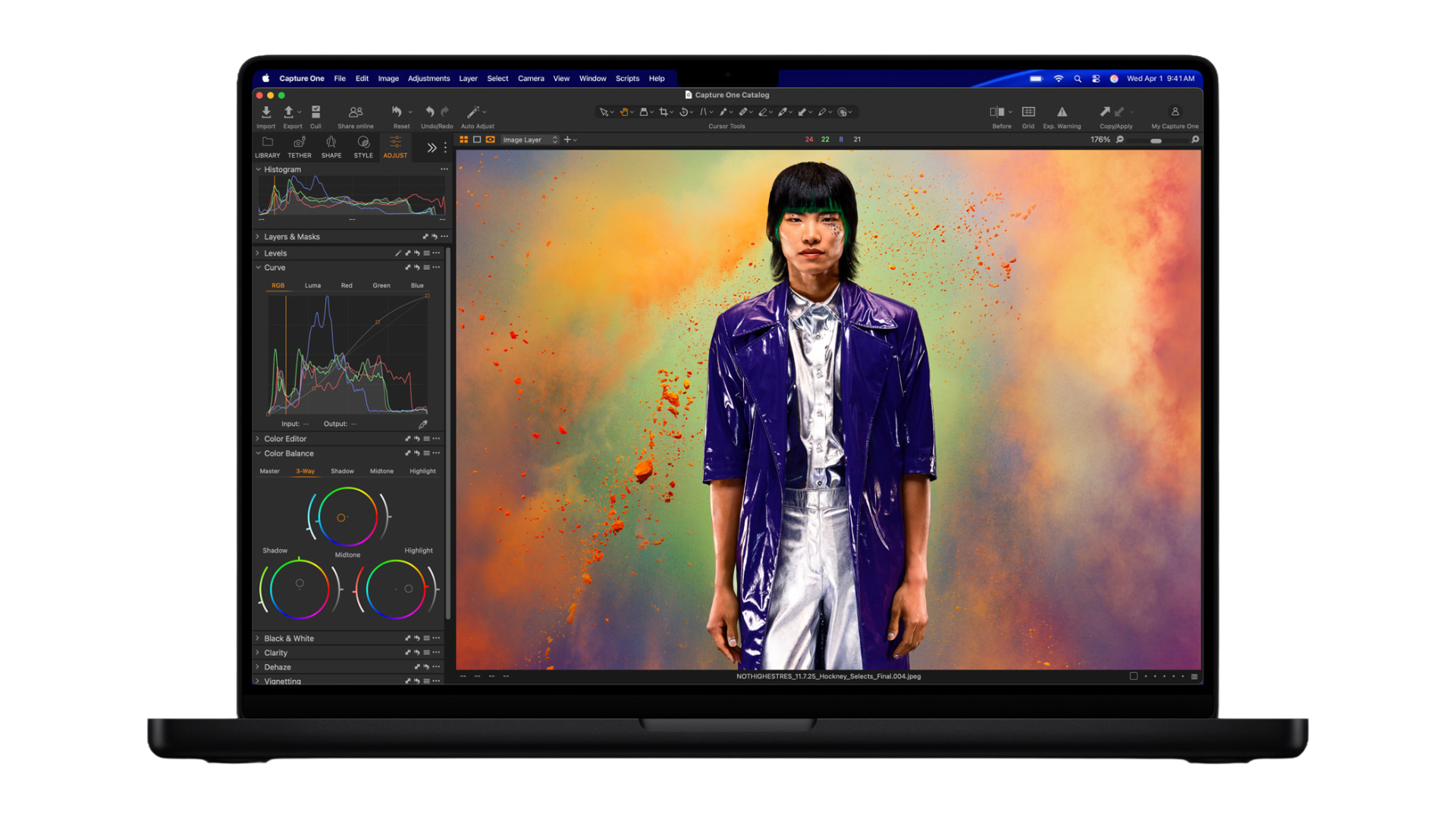
Apple also raised the starting price for the M5 Pro MacBoook Pro. The base 14-inch model now starts at $2,199, which is $200 more than the $1,999 starting price of the M4 Pro MacBook Pro.
But just as we saw with the Air, Apple didn’t just raise the price without giving you something in return. The M5 Pro model now starts with 1TB of storage. The M4 Pro model started with 512GB. Configuring an M4 Pro MacBook Pro with 1TB of storage cost—you guessed it—$2,199.
In other words, the price for a MacBook Pro with M5 Pro and 1TB of storage is identical to what you paid for the M4 Pro with the same configuration. Apple didn’t raise the effective price; it simply eliminated the 512GB entry point and moved the floor up to 1TB.
The 16-inch MacBook Pro with M5 Pro starts at $2,699, up $200 from the M4 Pro 16-inch. The same storage-adjusted logic applies here as we saw with the 14-inch model.
The bottom line for MacBook Pro M5 Pro buyers: If you were going to buy a 1TB configuration anyway—and most Pro users really should—the price hasn’t changed at all. You’re getting the same dollar amount of laptop, with a faster chip and double the SSD speed.
MacBook Pro M5 Max: $400 More
The MacBook Pro with M5 Max is where the pricing leap gets a bit more significant. The 14-inch M5 Max starts at $3,599, up $400 from the M4 Max’s $3,199 starting price. The 16-inch M5 Max now opens at $3,899, compared to the M4 Max’s $3,499.
But once again, Apple has upped the base storage in return. The M5 Max now starts with 2TB of storage, versus 1TB for the M4 Max. Adding a 2TB SSD to the base M4 Max MacBook Pro cost $400 on top of the $3,199 starting price, bringing it to the new M5 Max starting price of $3,599. For the 16-inch, the same upgrade brought the M4 Max to $3,899, again, the same as the M5 Max starting price for this model.
So, the math works out the same way it does for the Air and M5 Pro models: configure the previous-generation machine to match the new standard configuration, and the prices align pretty neatly.
The bottom line for MacBook Pro M5 Max buyers: You’re paying more to get in the door, but that higher floor gets you twice the starting storage, dramatically faster SSD speeds (up to 14.5GB/s), and the performance headroom of the M5 Max chip. If your workflows involve 4K or 8K video, large machine learning datasets, or other data-intensive tasks, the extra storage isn’t padding, it’s practical.
So, Did Apple Actually Raise Prices?
As we’ve learned, yes and no.
At the entry level, Apple did raise the MacBook Air’s starting price by $100 while dropping the old $999 floor entirely. That stings if the 256GB model was your target and you don’t prioritize internal storage. If, however, you were planning on 512GB, which reflects real-world storage needs for a lot of users, you’re actually paying less, and getting a newer chip.
For the MacBook Pro lineup, the pricing shift is a wash when viewed through the lens of storage-equivalent comparisons. Apple removed the lower-storage configurations and made previously optional storage the new standard. The resulting prices, when mapped against equivalent M4 configurations, are essentially unchanged.
As noted above, for buyers who genuinely only needed the base storage tier and were relying on that lower entry price, Apple has effectively raised the minimum buy-in. The company is nudging everyone up the storage ladder whether they asked to be or not, likely to offset rising RAM prices. Whether that feels like value or coercion likely depends on where your storage needs actually land.
That said, the M5 MacBook Air, M5 Pro MacBook Pro, and M5 Max MacBook Pro deliver faster processors, significantly faster SSD speeds, updated wireless connectivity via the N1 chip, and expanded maximum storage capacity. For most buyers, that’s a reasonable trade.