
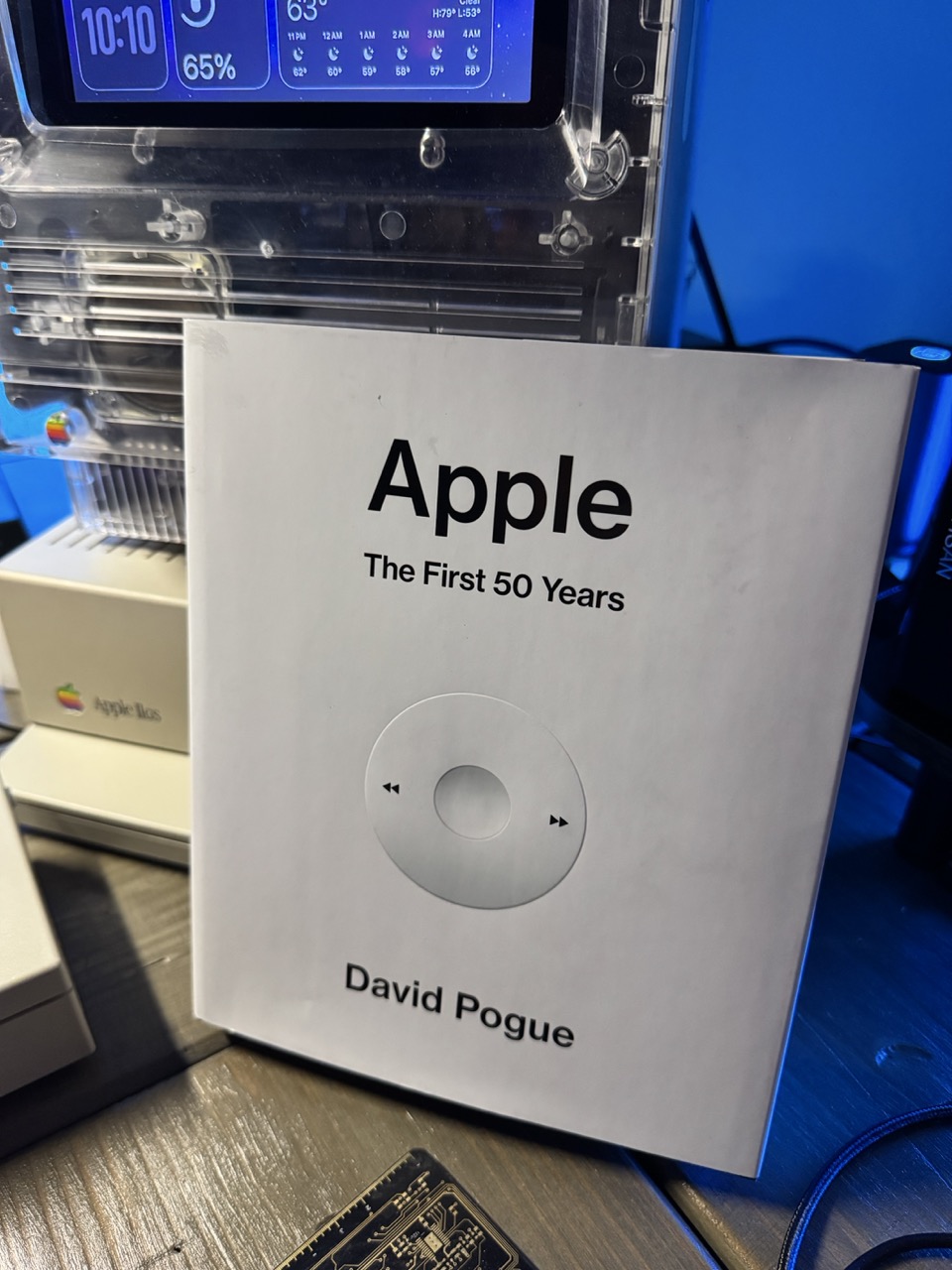
April 1st, 2026 marked Apple’s 50th anniversary, and if you’re anything like me, you were excited about all of the news and stories being published commemorating the occasion. One piece of media in particular got the party started early: “Apple: The First 50 Years” by David Pogue. If the author’s name sounds familiar, chances are you’ve read one of his many articles in print (The New York Times, MacWorld) or you may have read one of his numerous “Missing Manual” books.
Having enjoyed Mr. Pogue’s writing for the better part of more than 30 years, I had a pretty good idea on what I could expect from his latest book. Would there be clear, human understandable explanations for highly technical concepts? Yes. Absolutely. Would there be a wry sense of humor permeating throughout the book? Without a doubt.
“Apple: The First 50 Years” takes a look at the famous six color company from before its inception all the way through to present. Even if you think you know all there is to know about Apple, you will come away with many new insights after reading this book.
The book, which clocks in at a massive 569 pages, is divided into four main sections: Startup, Interregnum, Steve 2.0, and Tim. It should be clearly stated that this book is not a rose-tinted love letter to Apple. Through numerous interviews from both people inside and outside of the Cupertino company along with meticulous research, Mr. Pogue presents the people, products and the events that transpired in a way that allows the reader to understand what the realities of working at Apple were really like.
The moments that are often celebrated by Apple fans, such as the release of the first Macintosh, came with unseen collateral damage to many of the engineers who worked on the project. In “Apple: The First 50 Years”, Steve Jobs is presented as a real, but flawed visionary—not the mythological, god-like figure that some seem to carry in their minds. The book also spends time examining the challenges faced by Apple’s other CEOs, including Michael Scott, Mike Markkula, John Sculley, Michael Spindler, Gil Amelio and Tim Cook.
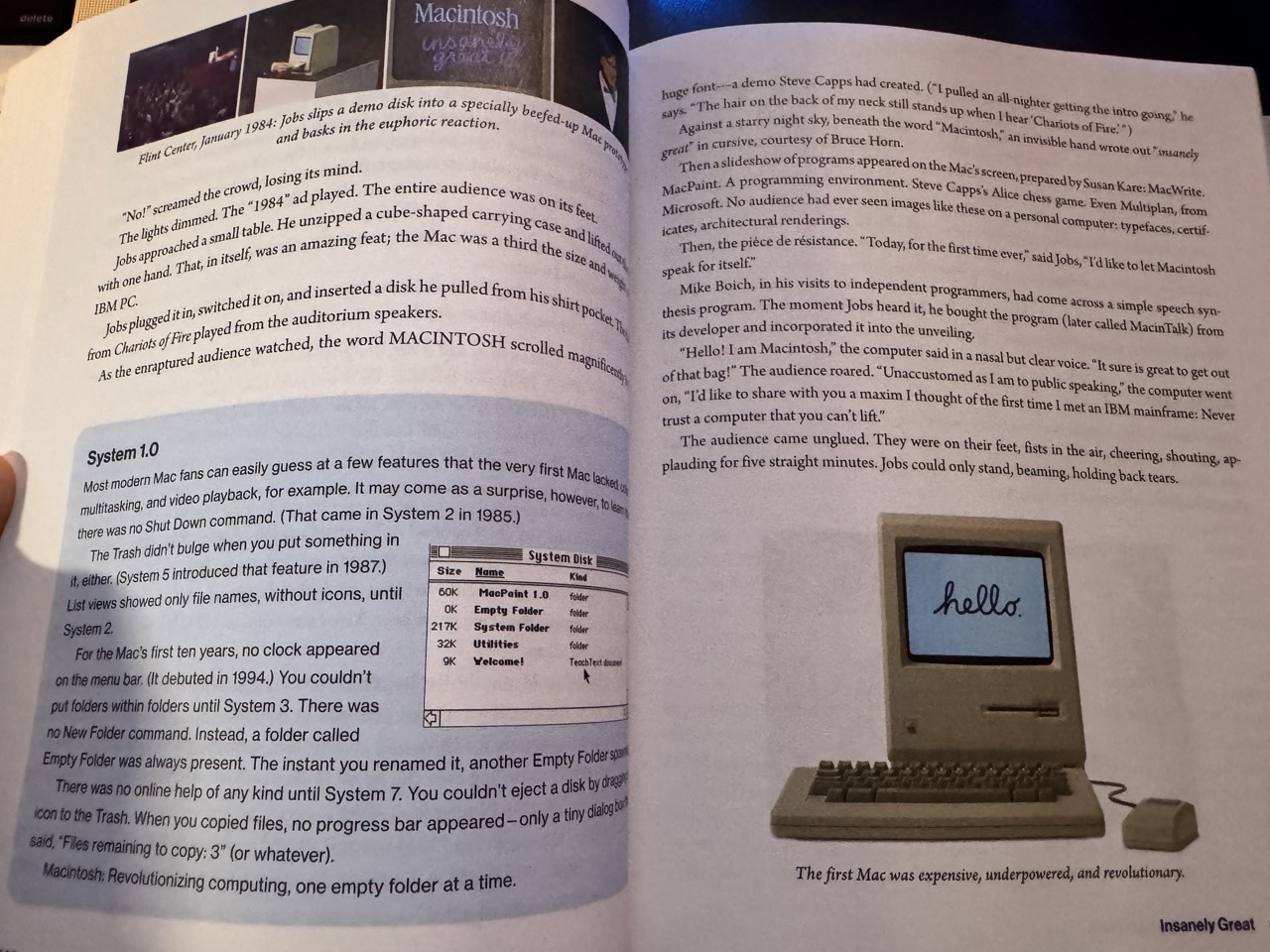
“Apple: The First 50 Years” is no dry tome. The book includes many color pictures that accompany the text. Mr. Pogue has written this book in a very approachable style. You don’t have to be an Apple nerd to understand or appreciate it. But, if you are an Apple nerd, you won’t be disappointed either.
As an Apple II fan from the late 80’s, I would often wonder why my favorite computing platform was getting short shrift compared to the Mac. After reading this book, I have a much better understanding on what was happening behind the scenes.
Every Apple product gets coverage—including several models that were never released to the public. The book also delves into the development of major Apple milestones, including the iPod, Mac OS X, and the iPhone.
After reading this book, I came away with a new-found appreciation for some of Apple’s main players, especially John Sculley. If it weren’t for Sculley’s shrewd investments in ARM, Apple may never have had its comeback in the early 2000’s.
I thoroughly enjoyed “Apple: The First 50 Years”. It’s a highly enjoyable book for both techies and non-techies alike. I just hope I’m around for Mr. Pogue’s inevitable follow-up book: “Apple: The First 100 Years”.