
Apple has officially discontinued the Mac Pro, and according to a report by Chance Miller at 9to5Mac confirming the news with Apple, the company has no plans to offer the Mac Pro again in the future.
The confirmation news broke following a quiet removal of the Mac Pro from Apple’s website. The dedicated Mac Pro page now redirects to Apple’s general Mac homepage, where all references to the Mac Pro have been scrubbed.
And though the removal was sudden, the decision itself is anything but surprising. The Pro hasn’t been updated since 2023 and three years with no updates in the Apple Silicon era might as well be an eternity as Apple’s year-on-year performance gains with its M-Series chips continue to provide meaningful nudges for users to upgrade their hardware.
The Mac Pro dates back to 2006, when Apple transitioned from PowerPC to Intel processors. The company rebranded its high-end tower from “Power Mac” to “Mac Pro.” The last several years of the product’s lifespan stand in stark contrast to its first.
As pointed out by John Gruber at Daring Fireball, in the model’s early years, the machine got regular speed bumps: 2008, 2009, 2010, and 2012. Then came the cylindrical “trash can” Mac Pro in 2013 , a radical industrial design that fell on its face due to thermal throttling issues. The controversy surrounding the trash can Mac Pro forced Apple to regroup and rethink its desktop strategy. The company releasing the beloved iMac Pro in 2017 as both a mea culpa and a legitimate, though stop-gap, professional grade solution while the company redesigned the Mac Pro. (This worked so well that there are countless Apple customers out there today wishing the company would release a new iMac Pro.)
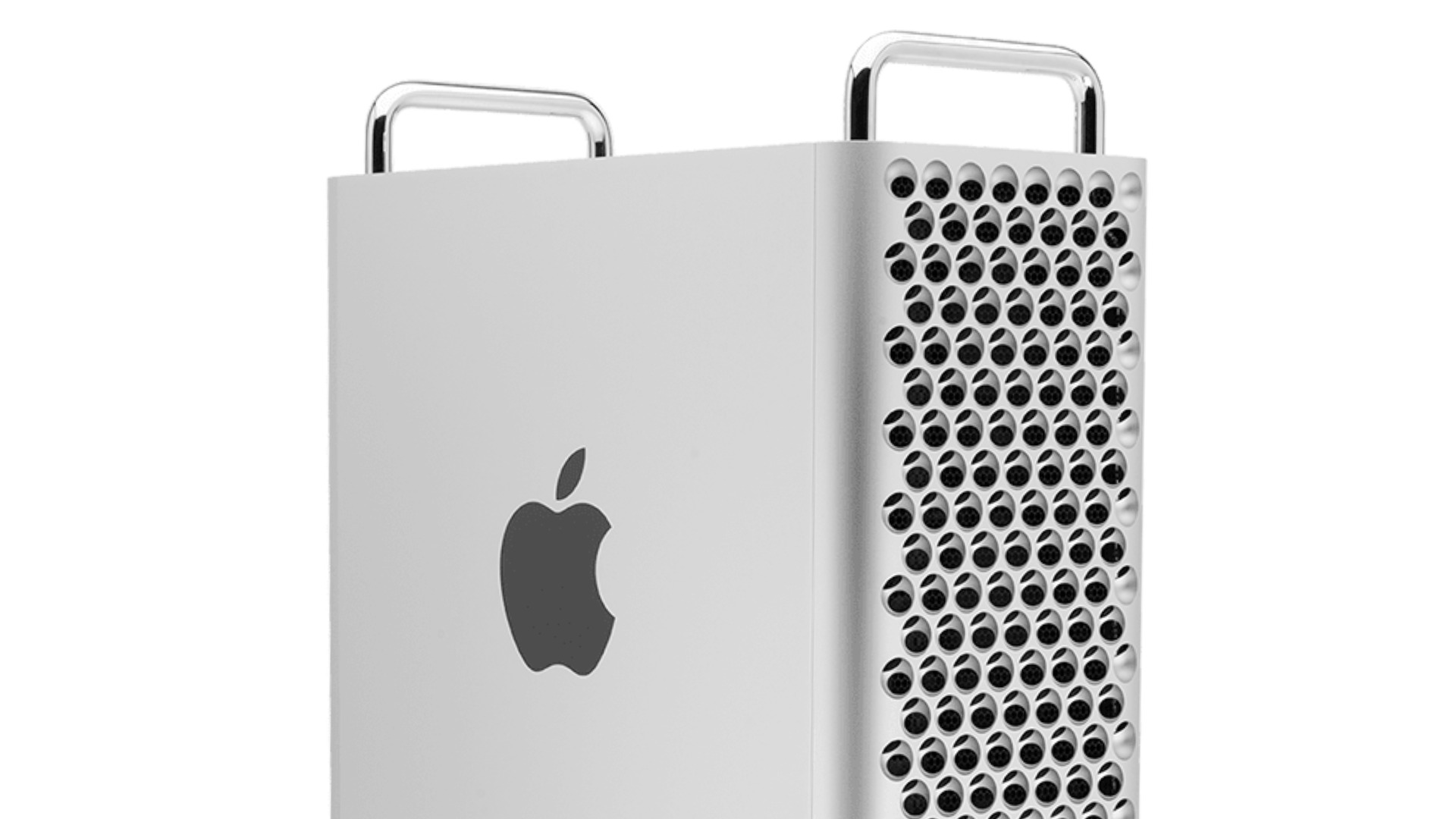
The fully redesigned Mac Pro launched in 2019 with a distinctive drilled-hole aluminum enclosure. The tower launched alongside the Pro Display XDR, further evidence that Apple was fully recommitted to the professional space.
That 2019 Mac Pro was the last Intel-based model, and the Pro would receive only one further update: an Apple Silicon refresh in June 2023 with the M2 Ultra chip.
The Mac Studio takes the throne
If anything is responsible for the death of the Mac Pro, it’s the Mac Studio. While the Mac Pro’s tower design is a holdover from a bygone era of inefficient Intel processors that needed a huge amount of power and a lot of cooling, the Mac Studio was designed around Apple Silicon, which is much more power efficient and requires much less cooling. As a result, the Studio packs workstation power in a much more compact package. And it has been doing the Mac Pro’s job at a lower price for a while now.
When Apple debuted the M3 Ultra chip in the Mac Studio last year, the Mac Pro was left sitting at $6,999 with an M2 Ultra—a full chip generation behind in performance while demanding a flagship price.
The Mac Studio can now be configured with the M3 Ultra, a 32-core CPU, an 80-core GPU, up to 256GB of unified memory, and up to 16TB of SSD storage. For the vast majority of professionals who previously would have considered a Mac Pro, the Mac Studio delivers comparable or superior performance at a fraction of the price and in a dramatically smaller footprint.
Plus with macOS Tahoe 26.2, Apple introduced a low-latency RDMA over Thunderbolt 5 feature that allows multiple Macs to be connected together for clustered performance. For users at the extreme high end of the market—those doing multi-node rendering or AI workloads—a cluster of Mac Studios now represents a viable and scalable architecture.
The sole Mac Pro capability that has kept the model relevant with Pro users has been its PCIe ports and expansion. In fact, there are lots of older Mac Pros still in use today because of this expandability. Thunderbolt 5 has changed the calculus around that though thanks to its enormous bandwidth of 80Gbps. Why spend an extra $3,000 on a Mac Pro when a $329 Thunderbolt 5 solution like the OWC Mercury Helios 5S makes connecting cards to a Mac Studio as easy as plugging in a cable?
It’s also worth noting that the Pro Display XDR—the monitor Apple introduced alongside the 2019 Mac Pro tower—was itself discontinued earlier this month. Its replacement? The Studio Display XDR. Further cementing the idea that at Apple “Pro” is now “Studio”.
The Mac Pro is still a great value
Just because the Mac Studio killed the Mac Pro doesn’t mean the Studio is also the wisest use of your money. After alol, Apple discontinuing the Mac Pro didn’t suddenly make the capability and super useful PCIe ports on all existing Mac Pros suddenly vanish.
If you still need the PCIe expansion capabilities of a workstation-class tower, buying a used Mac Pro is a great way to tap into a lot of capability and expandability without breaking the bank. Check out our selection of used Mac Pros here at MacSales. You can configure a Mac Pro that not only meets your needs, but also one that will last you for the long haul at a huge savings. At MacSales you choose the processor, RAM, and storage capacity your Mac Pro needs. Plus it comes with a free 1-year warranty. Save with used Mac Pros here.