
Last month, Apple made a few waves with the confirmation that it would soon begin inserting ads into Apple Maps. But there’s a larger story beyond the impact this change will have on Maps users.
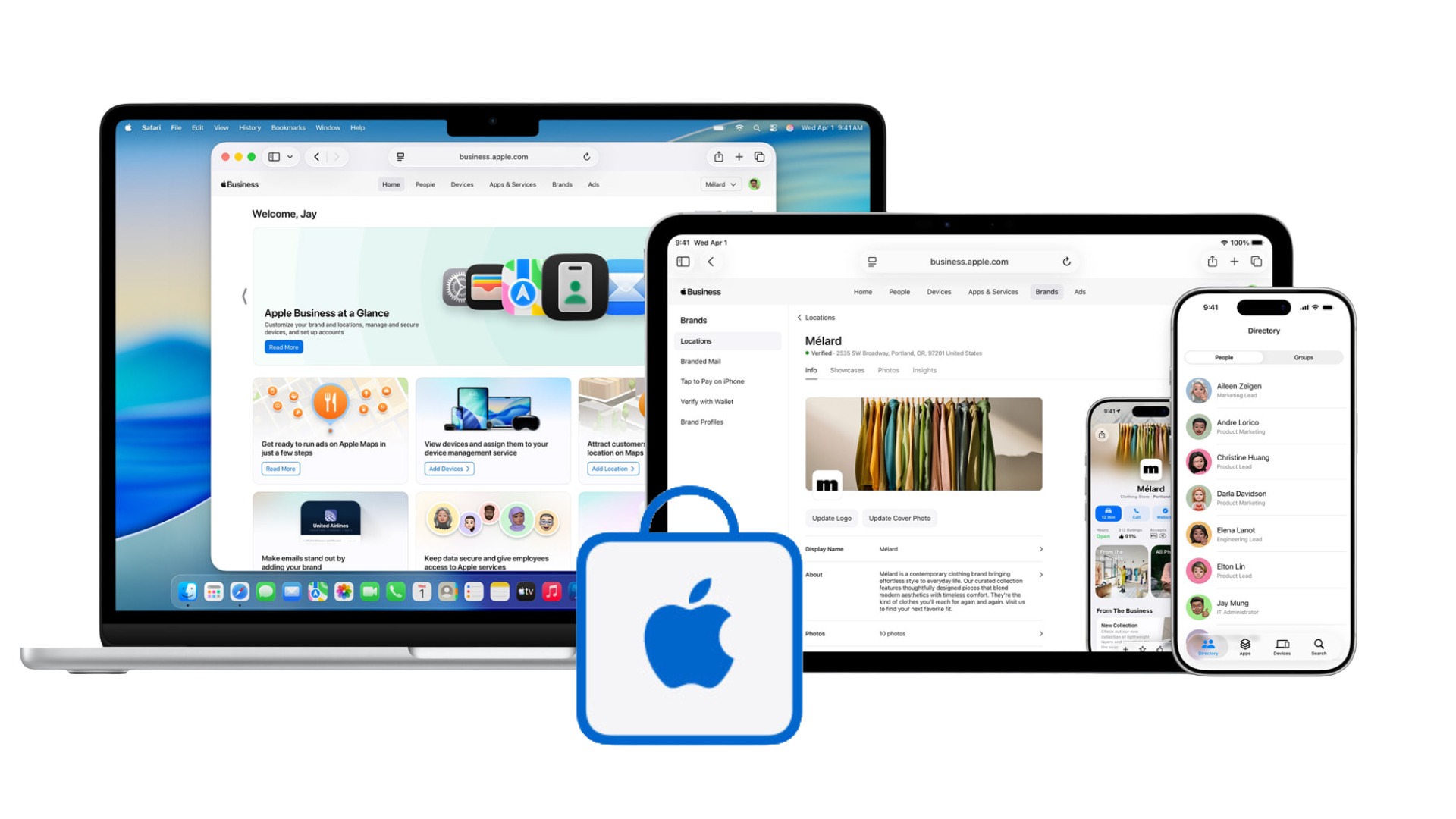
The change comes as part of the launch of Apple Business. While Apple has offered businesses several tools for managing their business, deploying and managing Apple devices to its employees, and reaching customers through Apple devices and services, Apple Business represents a consolidation of these efforts in order to streamline things for business owners.
Specifically, Apple Business replaces three separate products: Apple Business Connect, Apple Business Essentials, and Apple Business Manager. The platform also adds several new capabilities, including integrated email and calendar services, a companion employee app, and the aforementioned ability to place ads in Apple Maps to reach new customers.
What’s Getting Consolidated
Before diving into what’s new, let’s discuss what separate tools are getting pulled into the Apple Business platform. Apple Business Essentials, Apple Business Manager, and Apple Business Connect will all be discontinued as separate entities when Apple Business launches on April 14.
- Apple Business Connect was a free tool that allowed business owners to add and manage how their company appears in Apple services like Maps, Wallet, Siri and more. It allowed businesses to claim their business, location, and other details in these apps, as well integrating contactless payment options like Apple Pay while providing data and insights on how potential customers find and interact with the business in these apps.
- Apple Business Manager was a free tool that allowed business to deploy Apple devices within their business, manage AppleIDs, and buy content.
- Apple Business Essentials was a subscription-based tool built atop Apple Business Manager that added built-in mobile device management (MDM), AppleCare support, and cloud storage.
Existing data from Business Connect like claimed locations, place card information, photos and account details will migrate automatically to Apple Business. Business Essentials customers will stop being billed their monthly device management fee as of that same date, as MDM is now included in Apple Business at no cost.
Built-In Mobile Device Management That Saves Huge Amounts of Time
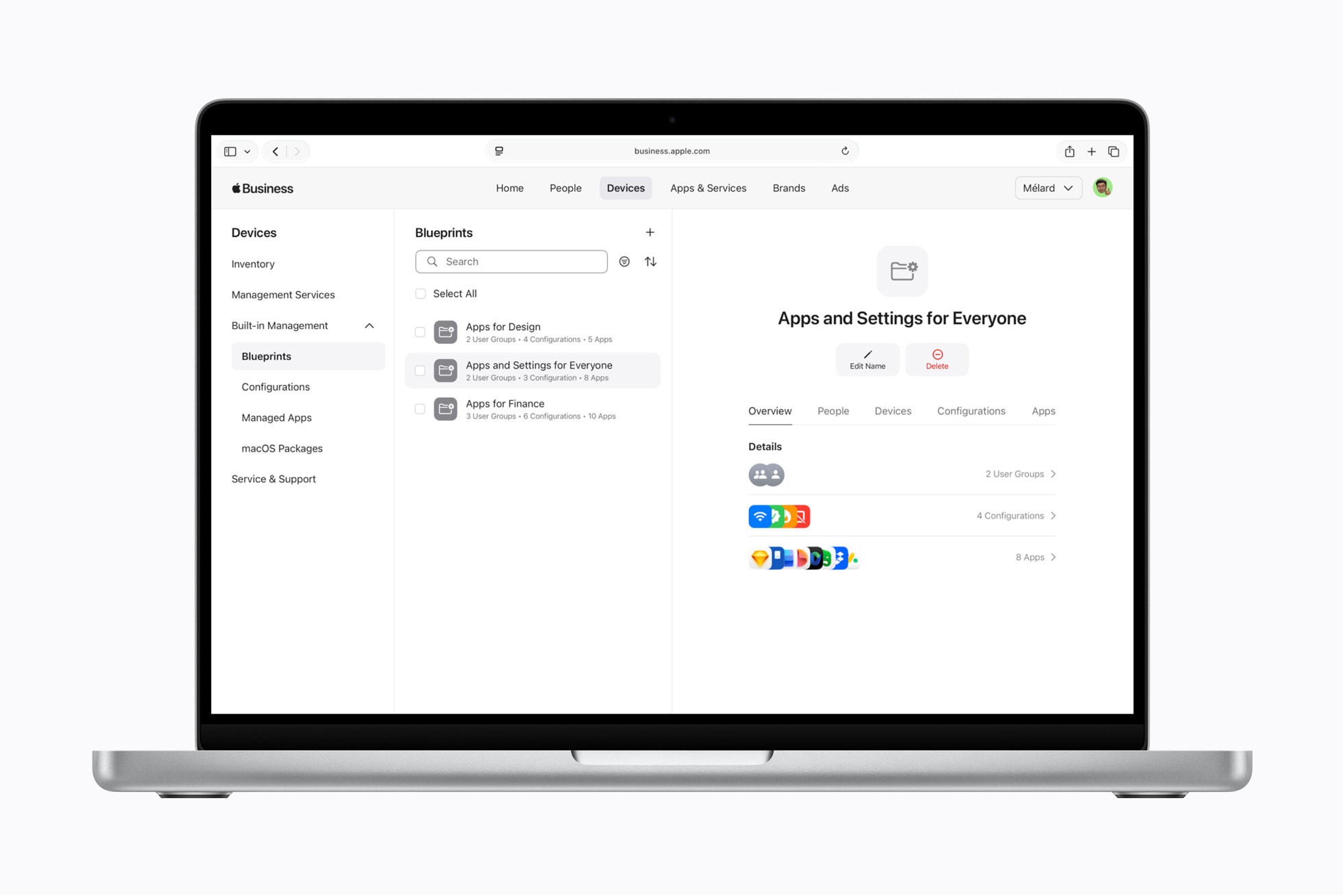
The MDM offering in Apple Business is designed to be approachable for organizations without dedicated IT staff. The core tool is a new feature called Blueprints: preconfigured templates that let administrators set up devices with specific apps, settings, and security policies before a new employee ever touches the hardware. Combined with zero-touch deployment (available when devices are purchased through Apple or Apple Authorized Resellers), a new Mac or iPhone can arrive at an employee’s desk ready to use, with nothing to configure manually.
Beyond setup, Apple Business provides a centralized view of all organizational Apple devices, user groups, app distribution, and security settings from a single interface. Managed Apple Accounts keep company data cryptographically separate from personal data on shared or BYOD devices. Account creation for new employees can be automated through integration with identity providers including Google Workspace and Microsoft Entra ID.
Additional device management features include custom role management, Admin API access for large deployments, and built-in options to purchase upgraded iCloud storage (starting at $0.99 per user per month, up to 2TB) and AppleCare+ for Business coverage (starting at $6.99 per month per device, or $13.99 per month per user for up to three devices).
Email, Calendar, and Directory With Your Own Business Domain
One of the more notable additions for small businesses and startups is a fully integrated suite of productivity and collaboration tools built directly into Apple Business. Businesses can bring an existing custom domain or purchase a new one through the platform, then set up professional email, calendar, and directory services under that domain—all without relying on a third-party provider.
The calendar tools include scheduling features like delegation, and the built-in company directory gives employees a shared contact resource with user groups and personalized contact cards. A companion Apple Business app for employees will let team members install work apps, view colleague information, and request support from their iPhone or iPad. (The companion app and these communication features require iOS 26, iPadOS 26, or macOS 26.)
Brand Management and Apple Maps Visibility
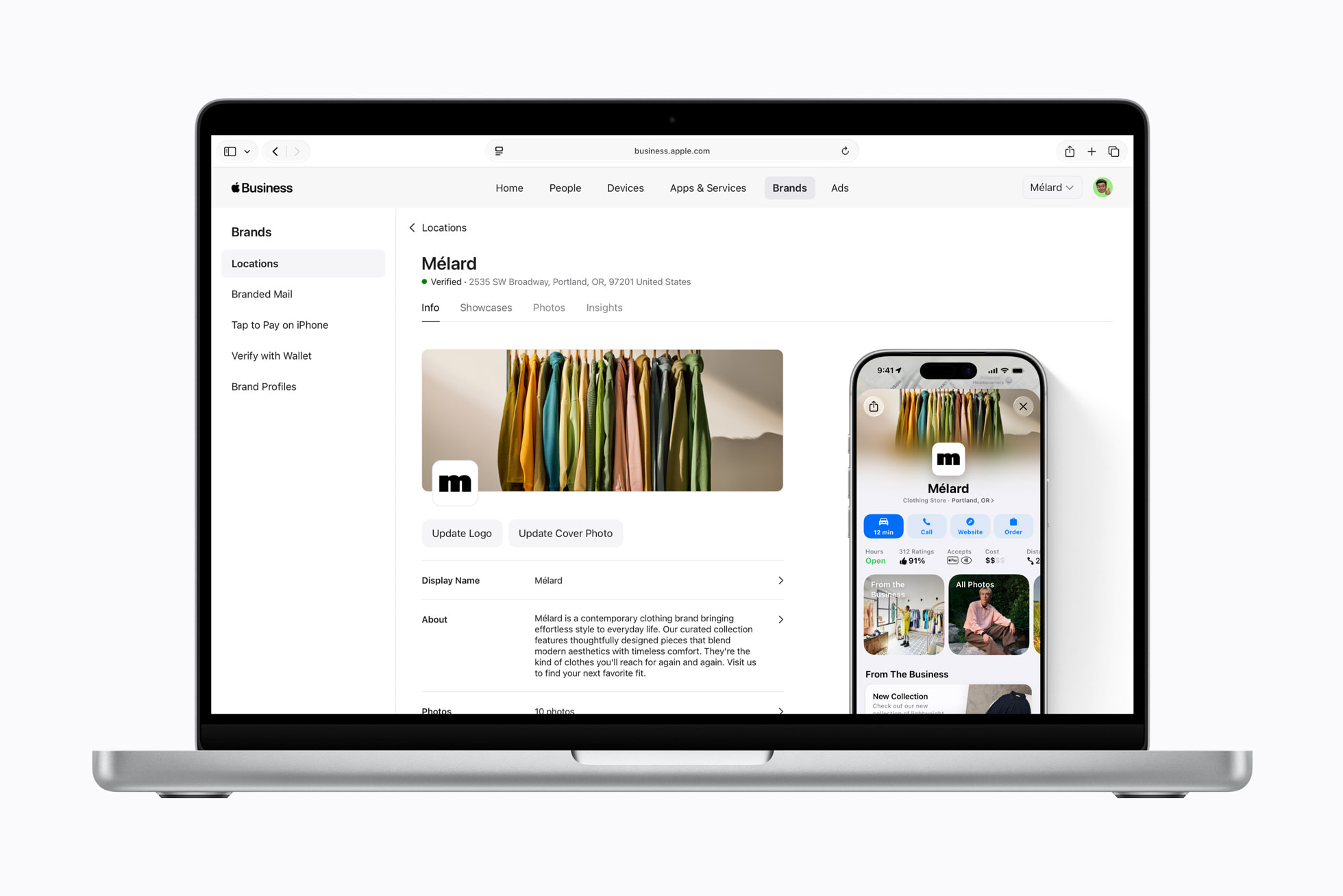
Apple Business absorbs all the brand management tools previously found in Apple Business Connect, making those local discovery tools available in one place alongside everything else.
From within the platform, businesses can manage how they appear across Apple Maps, Safari, Spotlight, Wallet, and the Mail app. That includes:
- Brand profiles: Set consistent name, logo, and key details across Apple Maps and other Apple surfaces.
- Rich place cards: Customizable listings with photos, hours, and detailed location information that appear in Maps and Safari. Businesses can also add Showcases to highlight deals, seasonal items, or new products, along with custom action buttons, like “Order” or “Reserve”, that link directly to a preferred site or app.
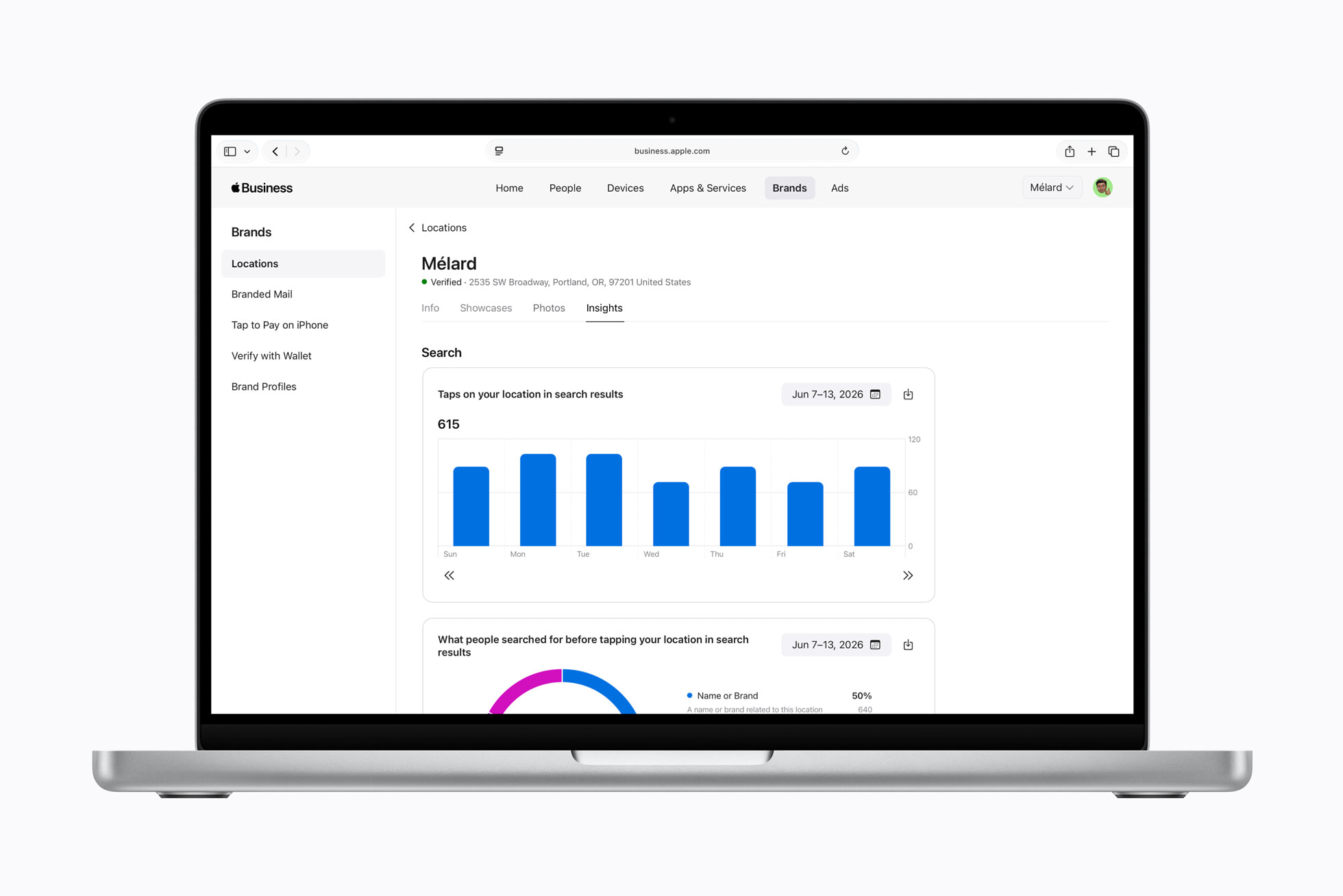
- Location insights: Data on how customers find and interact with a business in Maps, including search views and taps on actions.
- Branded communications: Business branding displayed in Apple Mail and iCloud Mail, and on tracked order notifications in Wallet.
- Tap to Pay on iPhone: When accepting payments, the business name and logo appear on the payment screen to build customer trust.
Ads on Apple Maps Coming This Summer
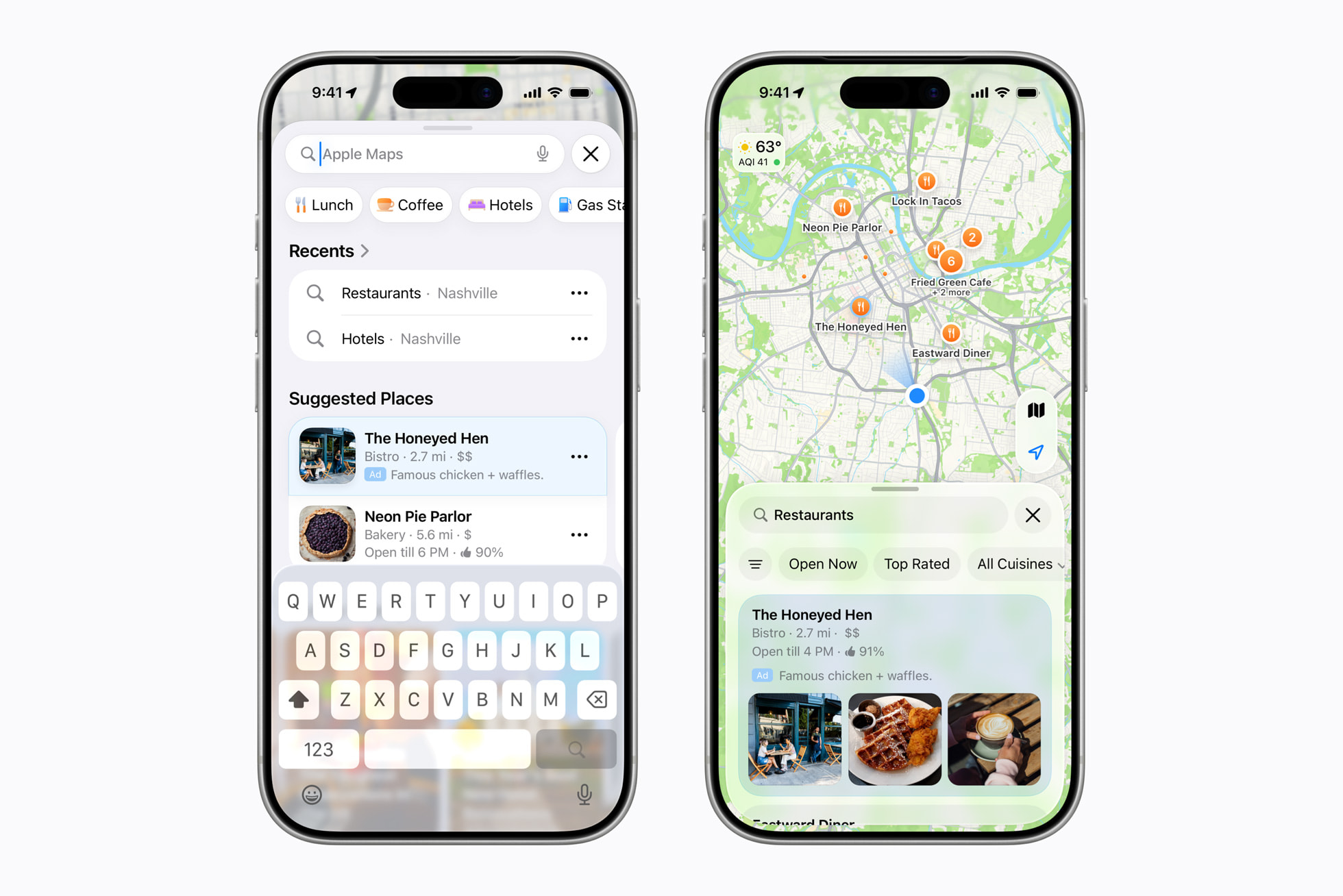
As detailed in full in our previous post, Apple Business opens up a new advertising opportunity for businesses in Apple Maps. Beginning this summer, businesses in the U.S. and Canada will be able to place ads inside Maps at key moments of search and discovery. Sponsored results can appear at the top of Maps search results based on relevance, as well as within a new Suggested Places section that will surface recommendations based on what’s trending nearby and a user’s recent activity.
To place ads, businesses must first claim their location through Apple Business when the platform launches in April, ahead of the ads going live this summer. The setup experience is designed to be straightforward and self-serve. Current Apple Ads customers and agencies will have access to additional customization through the existing Apple Ads platform, including keyword and brand-name targeting.
Pricing and Availability
Apple Business is free. It launches April 14 in the U.S. and more than 200 countries and regions for new and existing users of Business Connect, Business Essentials, and Business Manager. The only paid components are optional: additional iCloud storage and AppleCare+ for Business.
Ads on Apple Maps will be available to U.S. and Canadian businesses starting summer 2026. Pricing for ads has not been announced.
For more information on Apple Business, check out business.apple.com/preview.