
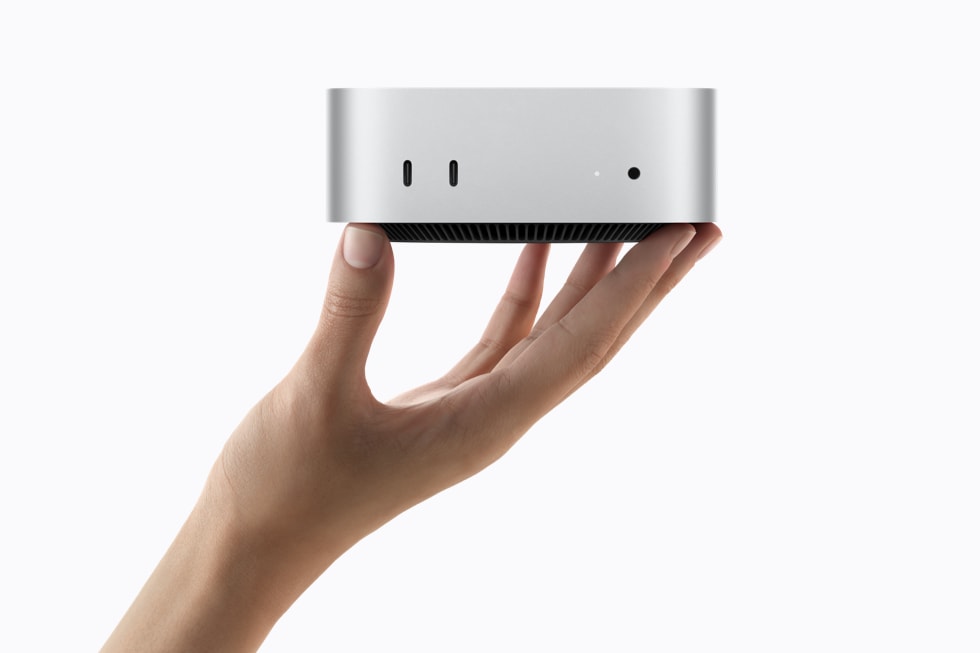
Alongside the announcement of its new M6 and M5 Ultra chips, Apple today refreshed its Mac mini lineup, replacing the previous generation M4 and M4 Pro models with new M6 and M5 Pro options.
And it’s clear that Apple has seen and heard the affinity for the Mac mini from AI enthusiasts, as much of how the company is positioning these new models centers around that discussion. But that doesn’t mean that the improvements brought on by M6 and M5 Pro will only benefit those users, with both chips delivering advances that will likely entice many types of everyday and pro users to upgrade. Let’s take a look at what’s new.
Mac mini with M6

The base Mac mini now runs on M6, the very first 2 nanometer chip to hit the market. The new CPU now features 12 cores, two more cores than both the M4 and M5 chips. With that added power, Apple says M6 delivers the fastest single-threaded performance of any chip on the market today. Meanwhile the 12-core GPU brings Neural Accelerators to every core for the first time on Mac mini. M6 also features a dual 16-cores Neural Engine.
When it comes to memory, Mac mini with M6 starts at 16GB with support for up to 32GB. Memory bandwidth has increased to 170GB/s. With this loadout, Apple claims M6 delivers 4x faster AI performance and 2x faster graphics versus the M4 model.
As we covered in our guide to running local AI models on your Mac, some context is needed with these new Mac mini numbers. The two biggest factors in running a local model are memory bandwidth and unified memory capacity. With 170GB/s bandwidth, the M6 would really only be suitable for running a smaller 7B or 8B parameter model. While the memory support up to 32GB would put this machine in the range of being able to run the more capable 12B-14B parameter models, those models require 200GB/s bandwidth at minimum, which the M6 doesn’t quite reach. It would have been nice to see Apple get M6 to that 200GB/s threshold to make the base model a truly more capable AI machine, especially with the price increase to $899.
For those not interested in AI or running models, the M6 Mac mini should be a noticeably snappier machine than the M4 model it replaces. Whether those performance improvements justify the $300 price increase is another question entirely…
Mac mini with M5 Pro: Pro-Level Muscle
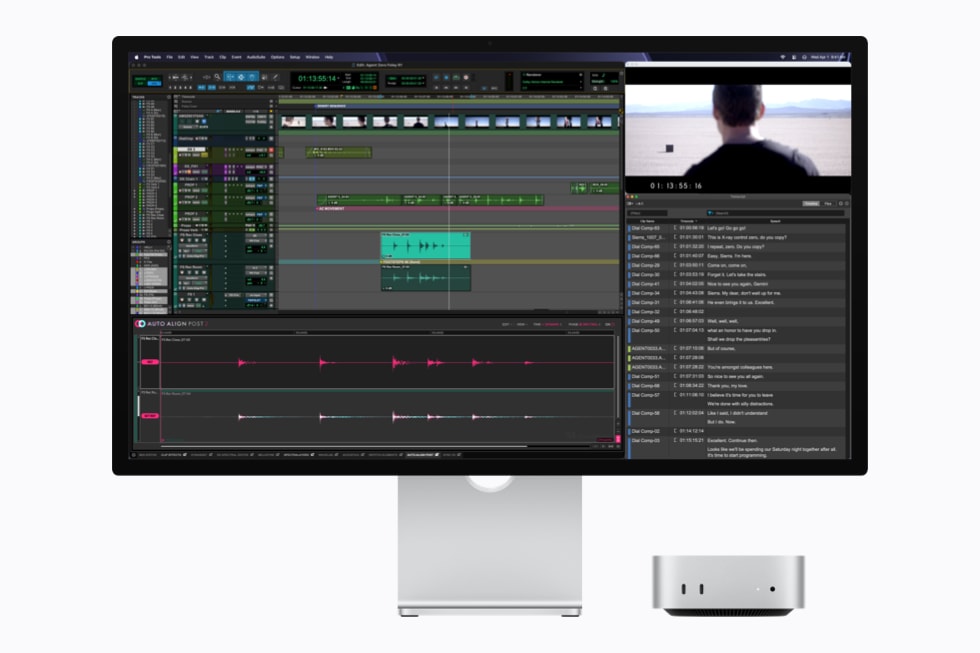
For users who need more headroom for running larger local AI models or tasks like video editing, Mac mini is also available with M5 Pro. It scales up to an 18-core CPU and a 20-core GPU with an enhanced shader core and third-generation ray tracing and, like the M6, brings Neural Accelerators into every GPU core.
The big jumps for local AI use with M5 Pro are memory bandwidth of 307GB/s and support for up to 64GB of unified memory. Those specs put you comfortably in the 12B-14B parameter range, models that are noticeably better at reasoning and coding than the smaller 7B-8B parameter models the M6 model can run.
Connectivity and Design Upgrades
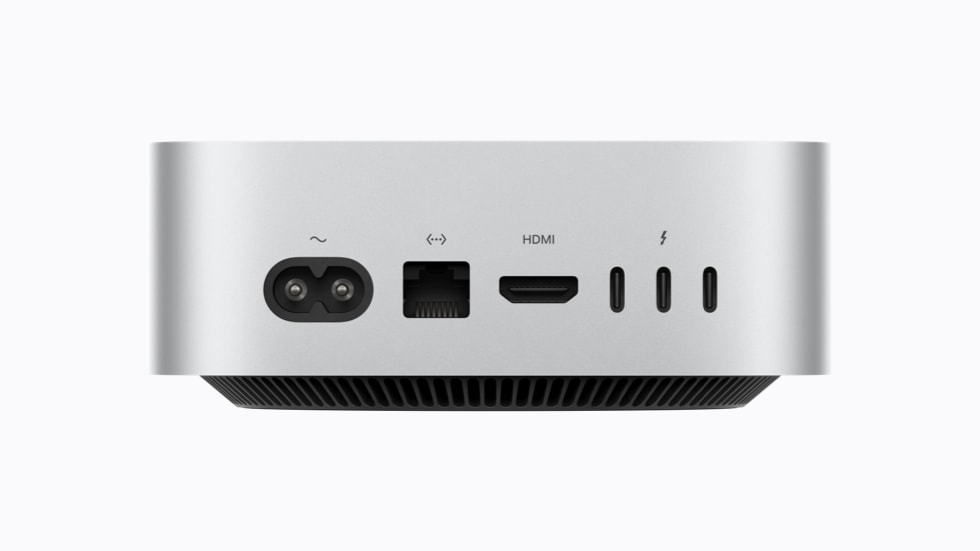
Both Mac mini configurations pick up Wi-Fi 7 and Bluetooth 6, along with upgraded 2.5Gb Ethernet (10Gb configurable). The front of the machine still offers two USB-C ports with USB 3 support and a headphone jack built for high-impedance headphones.
Around back, the M6 model includes three Thunderbolt 4 ports, while the M5 Pro model steps up to three Thunderbolt 5 ports — fast enough to cluster multiple Mac mini units together for running larger AI models across systems. A newly added genlock feature over USB-C also lets the Mac mini sync precisely with a display and a professional camera, including iPhone 17 Pro.
Software, Pricing, and Availability
The new Mac mini will ship with macOS 27 Golden Gate. Mac mini with M6 starts at $899 ($799 for education), while Mac mini with M5 Pro starts at $1,699 ($1,599 for education). Pre-orders are open now at apple.com and in the Apple Store app, with units arriving to customers and Apple Store locations starting September 22.